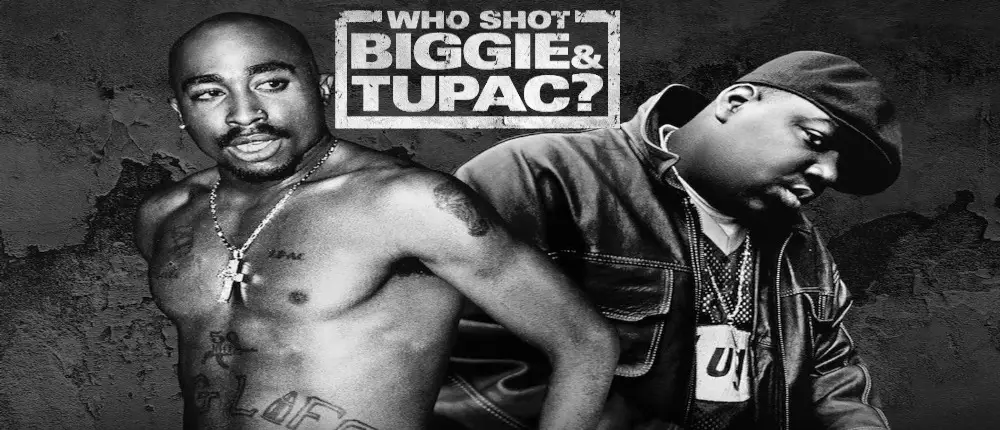

The 1990s were the golden era of hip-hop, but they were also marked by some of the most infamous rap feuds in history. One of the most explosive was the beef between Tupac Shakur and The Notorious B.I.G., a feud that spiraled into an all-out war between Death Row Records and Bad Boy Entertainment. At the heart of this conflict was Hit ‘Em Up, Tupac’s scathing diss track aimed at Biggie Smalls, Diddy, and the entire Bad Boy camp. But what led to the creation of this track, and why did it become one of the most notorious diss records in hip-hop history?
The Roots of the Beef
The rivalry between Tupac Shakur and Christopher Wallace, better known as The Notorious B.I.G., had its beginnings in a friendship. In the early ‘90s, Tupac and Biggie were on good terms, frequently seen together and even performing on the same stages. However, everything changed on November 30, 1994, when Tupac was ambushed and shot five times at Quad Studios in New York.
Tupac believed that Biggie and Sean “Diddy” Combs, then the head of Bad Boy Entertainment, knew about the setup but didn’t warn him. Adding fuel to the fire, Biggie released Who Shot Ya?, a song many interpreted as a taunt directed at Tupac. Though Biggie and Diddy denied the accusations, Tupac took it as a direct threat.
Signing with Death Row and the Escalation
While serving time in prison for a sexual assault conviction, Tupac’s anger toward Biggie and Bad Boy grew. In 1995, Suge Knight, the controversial CEO of Death Row Records, bailed Tupac out and signed him to the label. Suge had his own personal vendetta against Bad Boy, particularly after a Death Row affiliate was killed in a confrontation involving Diddy’s security.
At the 1995 Source Awards, Suge took a public shot at Diddy, famously saying:
“If you don’t want the executive producer all in the videos, all on the records, dancing… come to Death Row!”
This moment solidified the East Coast vs. West Coast rivalry, making it clear that the battle lines had been drawn.
The Creation of Hit ‘Em Up
Fueled by anger, betrayal, and the growing tension, Tupac went into the studio with his group, The Outlawz, and recorded Hit ‘Em Up in early 1996. The track, which was set to the instrumental of Junior M.A.F.I.A.’s Get Money, pulled no punches.
Right from the opening line, Tupac made it personal:
“First off, f*** your b**** and the clique you claim.”
Tupac alleged that he had an affair with Biggie’s wife, singer Faith Evans, though she denied it. The rest of the song was an all-out assault on Biggie, Diddy, and Bad Boy Records, threatening violence and declaring Death Row’s dominance.
What made Hit ‘Em Up different from previous diss tracks was its sheer venom. Tupac didn’t just attack his rivals lyrically; he made it personal, turning the song into a direct challenge.
The Aftermath and the Tragic End
The release of Hit ‘Em Up in June 1996 escalated the East Coast-West Coast feud to dangerous levels. Many in the industry feared that the beef had gone beyond music and into real-life violence.
Sadly, just months later, on September 7, 1996, Tupac was shot in Las Vegas in a drive-by shooting. He succumbed to his injuries six days later. Six months after Tupac’s death, on March 9, 1997, The Notorious B.I.G. was murdered in Los Angeles under eerily similar circumstances.
Legacy of Hit ‘Em Up
To this day, Hit ‘Em Up remains one of the most infamous diss tracks in hip-hop history. It set the standard for battle rap, showing just how brutal and personal rap feuds could become. However, it also serves as a cautionary tale about how far rap beefs can escalate when fueled by real-life tensions.
While we may never know the full story behind the murders of Tupac and Biggie, what remains undeniable is that Hit ‘Em Up was a defining moment in hip-hop culture—one that left an indelible mark on the genre.